Employers struggle with conduct that appears ambiguous but is interpreted by the “victim” as unlawful.  The dilemma arises most often in a sexual harassment setting.  For example, a co-worker comments that another’s clothes make her “look good” or that he “really likes” her perfume.  Employers, and courts, struggle with the intent behind this conduct.  For example, a recent case involved racial harassment allegations based in part on bananas and banana peels littering the truck of an African-American co-worker. Daily Report Online wrote about this case on its website last week.

Would such anonymous conduct support a claim for a racially hostile environment?  In December 2010, in granting summary judgment to an employer, an Alabama Federal District Court said, “No.” Continue Reading Employer Dilemma – How Should An Employer Respond to Ambiguous Workplace Conduct

A recent ruling reinforces that “how” an employer does what it does often is as important as what it does.  The case appeared relatively straightforward.  An employee missed a work shift and claimed intermittent FMLA leave.  One manager, who had been skeptical about some past intermittent leave use, saw the employee at a birthday party on the same day of the missed work shift.  The employer investigated.  There was evidence that the employee was at the party at the same time as some of the hours of her missed work shift.  The employee claimed she attended the party only after her shift would have ended, and that she was feeling better after resting for most of the day.

The employer terminated the employee, explaining it had an honestly-held belief that the employee had been at the party during her shift and was lying about it.  Rather than grant summary judgment to the employer, the Court ruled a jury trial was necessary.  Why?

Here are the reasons the Court did not defer to the employer’s claimed honestly-held belief under the “honest belief” rule: Continue Reading Employers Beware – “How” You Do Is Often As Material As “What” You Do

In a move that could significantly increase employer costs in the home care market, the Department of Labor has published proposed rules that will severely limit the current minimum wage and overtime exemptions for those who provide “companionship services.”

The proposed rules basically do two things:

  1. The rules narrow the definition of “companionship services. The Fair Labor Standards Act includes a specific exemption from minimum wage and overtime requirements for employees who “are employed in domestic service employment to provide companionship services for individuals who (because of age or infirmity) are unable to care for themselves.” 29 U.S.C. § 213(a)(15).  Currently, the DOL regulations define “companionship services” to include “fellowship, care, and protection for a person who, because of advanced age or physical or mental infirmity, cannot care for his or her own needs.” The regulations also provide that “such services may include household work related to the care of the aged or infirm person such as meal preparation, bed making, washing of clothes, and other similar services.” Such services may also include the performance of general household work provided that such services do not exceed 20 percent of the total hours worked each week.  See 29 CFR § 552.6.The proposed regulations remove from the definition of companionship services the provision of “care”  for the elderly and limit the services to “fellowship” and “protection”.  “Fellowship” is defined as “social, physical, and mental activities” such as “conversation, reading, [and] games” and protection is described as being present with the person in their home or accompanying the elderly person outside the home to “monitor” their “safety and well-being”. “Intimate personal care services” may be provided as long as such services do not exceed 20 percent of the work performed.  “Companionship services” no longer includes any general household work unless such service happens to be incidental to the “fellowship” and “protection” being provided.
  2. The new rules prohibit third party employers from claiming the exemption. Not only is the scope of “companionship services” to be greatly limited but the exemption is now only available to the elderly person or their family.  Third party employers of employees who provide companionship services, even if such services meet the new limited definition, will not be able to take advantage of the exemption from the minimum wage and overtime requirements.

As a matter of federal law, employers can require employees to agree to arbitrate any employment dispute.  But, can that arbitration agreement force an employee to arbitrate only individual claims, not class (or collective) claims?  Recently, the National Labor Relations Board said NOClick here for the Board’s ruling.

This ruling appears at odds with a ruling by the United States Supreme Court in AT&T Mobility LLC v. Conception.  There, the Supreme Court considered a California state law that invalidated any arbitration agreement that included a mandatory waiver of class claims.  The Supreme Court noted that the right to pursue class claims is a procedural right, not statutory, and overturned the California law.  Some employers then adopted arbitration agreements that included waivers of an employee’s ability to pursue class or collective actions.  Continue Reading Labor Board Rules that Arbitration Agreements Forbidding Class Arbitration is Unlawful

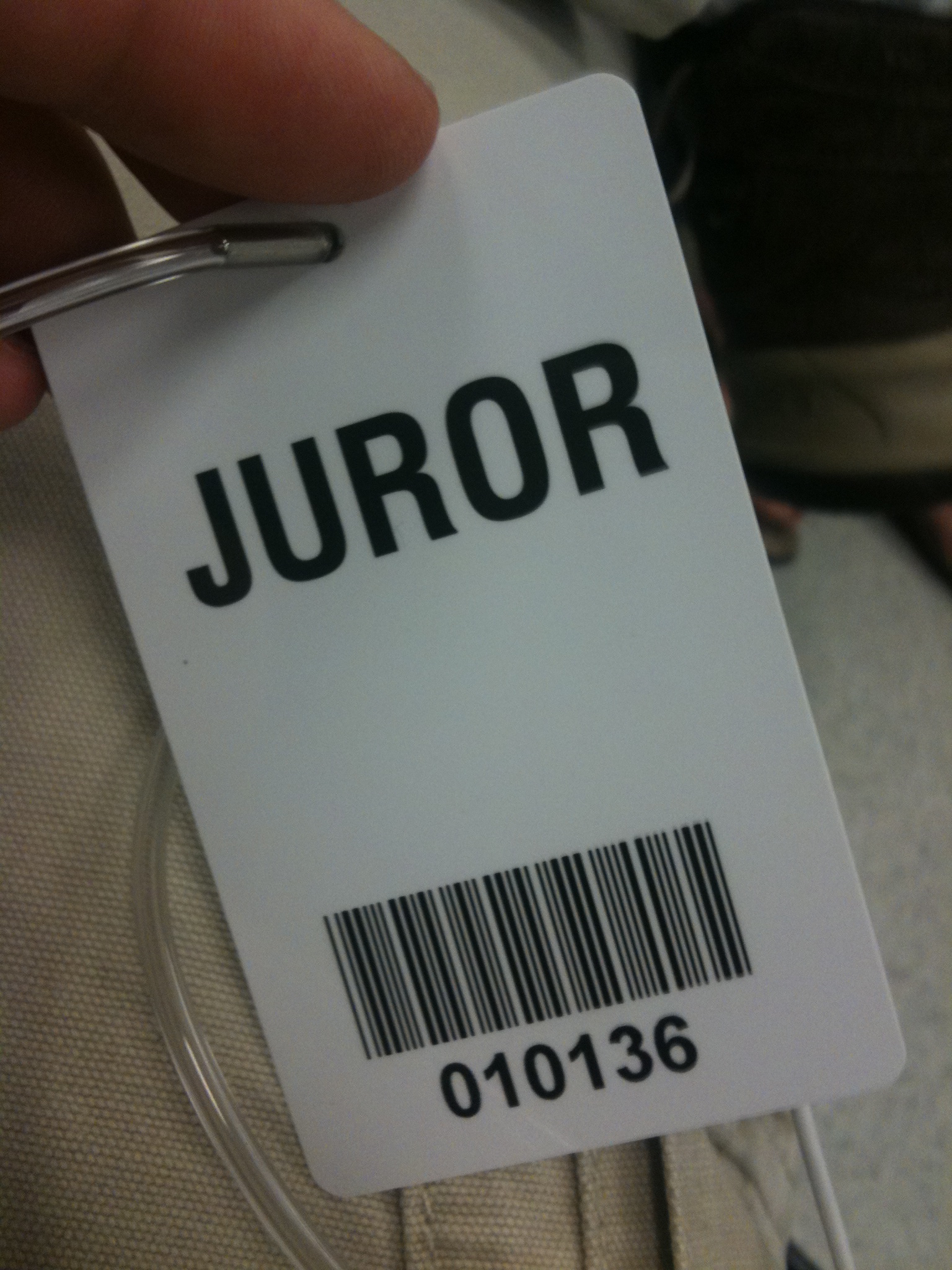
Jury dutyMost Tennessee employers are required to pay employees their “usual compensation” for jury duty.  But, what time is included in the phrase “jury duty” for the purpose of paying employees who serve?

That question was the subject of a recent Tennessee Attorney General opinion.  The Attorney General clarified that, under Tennessee law, jury duty includes the travel time to and from court to report for jury service, even if the employee’s “usual compensation” at his/her job does not include travel time.

Based on Tennessee law, a juror is entitled to an excused absence from work and, for certain employers (unless have less than five employees) to payment in the amount of their “usual compensation” for the time attributed to jury service (unless the employee has been employed for less than six months).  Attorney General Robert Cooper noted that the compensation provision of the law expressly states that the employer is not required to pay more than the employee’s time “spent serving and traveling to and from jury duty.” Tenn. Code Ann. § 22-4-106(b) (emphasis added).  Thus, in an opinion that is not surprising given this statutory language, commuting time to and from court is included in an employee’s jury duty pay.

Based on recent developments, employers wonder how much leave is really required under the ADA.  It seems that employers with even generous policies and practices have run afoul of the EEOC either in individualized cases, or, worse yet, in class claims.

Most recently, Verizon Communications Inc. settled for a record $20 million payout based on EEOC allegations that Verizon’s no-fault attendance policies did not adequately provide for an individualized assessment of an employee’s condition.  The EEOC has been focusing on such “no-fault attendance” and “maximum leave” policies.

How much leave is required, however, is not the correct question.  The better question is:  “What must be included in the employer’s process of evaluating an employee’s need for leave?”

Compliance with the ADA is often a “process driven” evaluation.  How you do something is almost as important as what you do. Continue Reading ADA Developments – “How Much Leave Is Required?” Is the Wrong Question

Social media sitesThe NLRB’s Division of Advice recently issued memoranda in several different cases, showing that not all activity by employees on social media sites constitute protected activity.  These reports show that the Labor Board, like many employers, struggle with what is “protected concerted activity” – and thus protected from any employer discipline – and what are mere individual gripes – and most likely not protected.

The NLRB’s attempt to provide guidance in these memoranda does show the Labor Board’s adoption of a more realistic view of what is protected activity on social media than some had feared (and more realistic than some critics had charged).  In short, “protected concerted activity” even on social media must show more than an individual employee’s private complaint or gripe about her/his employer. The employee must be expressing group complaints (acting “with or on the authority of” other employees) and generally must be interacting with employees in such expression. Forbes.com posted a good article illustrating the differences. In one instance, the NLRB even examined whether a particular employee’s Facebook wall included ‘friends’ who were co-workers. Continue Reading Labor Board Report Shows Its Struggles with the Realities of Social Media

A federal appeals court recently held that a job applicant cannot sue a prospective employer for retaliation under the Fair Labor Standards Act (FLSA). 

In the case, Dellinger v. Science Applications International Corp., the employee had to complete a security clearance form after a conditional offer of employment.  The form asked the applicant if she had been involved in any non-criminal court actions.  The applicant disclosed she had sued her former employer for wage/hour violations.  The employer then withdrew the offer of employment. As a result, the job applicant sued for retaliation.

In ruling that the applicant did not have a claim, the Fourth Circuit Court of Appeals (the federal appeals court for appeals from Maryland, North Carolina, South Carolina, Virginia and West Virginia), explained that the anti-retaliation provision of the FLSA applies only to actual employers, not prospective employers.  The Court recognized the compelling argument of the job applicant but still held that extending the law as requested would go beyond the law’s plain language.  An applicant who never began or performed any work could not, by the language of the FLSA, be an ’employee,’ the Court said.

Continue Reading Should Employers Now Ask All Applicants If They Have Sued Under FLSA On A Background Check?

Magnifying glassThe EEOC has renewed the debate recently on an employer’s use of background checks in hiring.  Nothing new right?  You know you cannot use arrest records but only convictions because in this country, all are innocent until proven guilty.  But the renewed debate is whether use of conviction records is unlawfully discriminating against minorities.

In evaluating use of conviction records, employers must balance their exposure for possible “adverse impact” discrimination claims and their exposure for negligent hiring or retention claims.  For more on this debate, The Wall Street Journal has a good post on its Law Blog.

Continue Reading Why the Renewed Debate on Criminal Background Checks?

Yes.  What laws apply to you as an employer often is dependent upon the number of employees you have.  In addition, how you count employees also matters.  (full-time only or do part-time count? What is employed for only part of a year?).

This article will provide a brief breakdown of some “head-count” numbers that are important in determining that information.  This is not intended as an all-inclusive list but provides some general guidance on when an employer may need to take a more detailed look to determine if certain laws apply.

Continue Reading Does it Matter How Many Employees I Have?